CleaningOpsPro may earn a commission on affiliate links. Our editorial recommendations are independent of any affiliate relationships.
Move-out cleans are the highest per-job revenue in residential cleaning. A standard maintenance clean on a three-bedroom home brings in $150-$200. The same home as a move-out? $375-$500, and that’s before add-ons. The margins are better, the scope is defined, and the client rarely haggles --- they need their deposit back, and they need it done by Friday.
But move-out pricing is where a lot of cleaning businesses leave money on the table or, worse, lose money entirely. Quote too low on a unit that hasn’t been cleaned in three years, and you’re working for $12/hour after labor costs. Quote too high without justification, and the tenant calls someone cheaper.
This guide covers the pricing models that work, the rates that hold in 2026, and the add-on structure that separates a $250 invoice from a $500 one.
Flat Rate vs. Hourly --- Which Model Works
Most residential cleaning businesses use flat rate pricing for move-outs, and there’s a good reason: the client knows what they’re paying before you show up, and you know what you’re earning. Hourly pricing creates uncertainty on both sides.
Flat rate advantages:
- Faster close. Tenants shopping move-out cleans want a number, not an estimate range.
- Higher revenue per hour if your crew is efficient. A team that finishes a $375 three-bedroom in 3 hours earns more than the same team at $50/hour.
- Easier to quote over the phone or through an online booking form.
Where hourly makes sense:
- Heavily soiled units where you genuinely can’t predict the scope from photos alone.
- Commercial move-outs or office vacates where the square footage varies wildly.
- Situations where the tenant wants “just the basics” and you need flexibility to scale down.
The sweet spot for most operators: flat rate by home size with add-ons priced separately. You give the tenant a base price they can budget for, and the add-ons let you capture the extra work without inflating the base quote.
If you’re running hourly, charge $40-$60 per cleaner per hour for move-out work. According to HomeGuide’s 2026 data, the national average for move-out cleaning labor runs $30-$50/hour, but that includes solo operators in low-cost markets. If you’re running a crew and carrying insurance, $40-$60 is the floor.
Move-Out Pricing by Home Size
These ranges reflect 2026 national averages for a standard move-out clean --- empty unit, no excessive damage, all surfaces cleaned. Prices run 20-40% higher in major metros (NYC, SF, LA, Chicago, Boston).
| Home Size | Price Range | Typical Time (2-person crew) |
|---|---|---|
| Studio | $150 - $200 | 1.5 - 2 hours |
| 1 Bedroom | $200 - $275 | 2 - 3 hours |
| 2 Bedroom | $275 - $375 | 3 - 4 hours |
| 3 Bedroom | $375 - $500 | 4 - 5 hours |
| 4 Bedroom+ | $500 - $700+ | 5 - 7+ hours |
How to use this table: Start with the base rate for the unit size. Adjust up for condition (heavy grease, pet hair, neglect) and down for newer or well-maintained units. A three-bedroom where the tenant kept things clean might be a $375 job. The same layout where someone smoked indoors for two years is a $500+ job or a walkaway.
Per Angi’s 2026 data, the national average for a move-out clean falls around $360, which aligns with a standard two-bedroom unit. Your pricing should sit at or above these averages if you’re insured, bonded, and delivering a deposit-back guarantee.
For a deeper breakdown of how these rates compare to recurring residential pricing, see our 2024 Residential Cleaning Price Index.
Add-Ons That Increase the Invoice
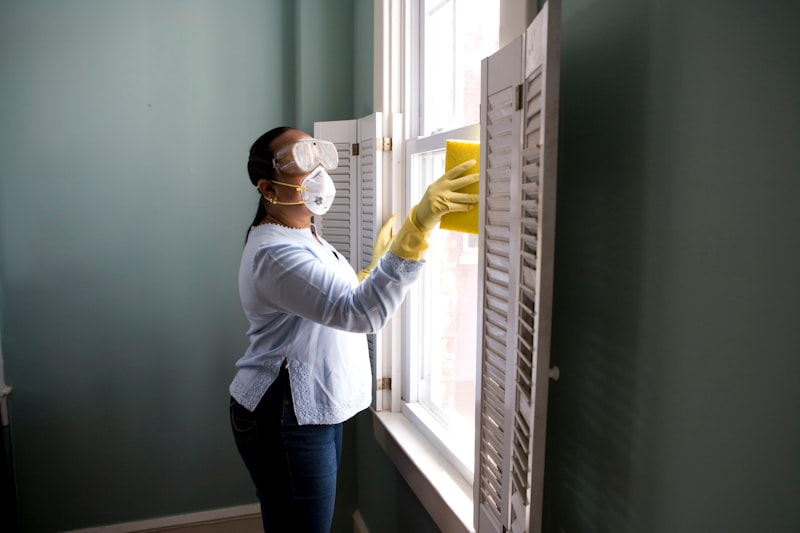
This is where move-out cleans become genuinely profitable. The base rate covers surfaces, floors, bathrooms, and kitchen --- the expected scope. Add-ons cover the work that takes extra time and that tenants frequently need but don’t realize isn’t included.
| Add-On | Price Range | Time Added | Notes |
|---|---|---|---|
| Inside oven (full degrease) | $25 - $50 | 20 - 40 min | Higher end for double ovens or heavy grease |
| Inside fridge (shelves, drawers, seals) | $25 - $40 | 15 - 30 min | Include freezer for the higher rate |
| Interior windows | $5 - $10 each | 5 - 10 min/window | Quote per window, not per room |
| Garage sweep + wipe | $50 - $75 | 30 - 60 min | Empty garage only --- decline if it’s full of junk |
| Carpet spot treatment | $50 - $100 | 30 - 60 min | Not a substitute for professional carpet cleaning |
| Wall spot cleaning | $25 - $50 | 15 - 30 min | Scuff marks and handprints, not full wall washing |
| Baseboard deep clean | $20 - $35 | 20 - 30 min | Often missed in quotes, always needed |
| Blinds (per set) | $10 - $15 | 10 - 15 min | Dusty blinds take longer than people expect |
The revenue math: A two-bedroom base at $300 plus inside oven ($40), inside fridge ($30), 12 windows ($84), and baseboard deep clean ($30) brings the invoice to $484 --- a 61% increase from the base rate. That’s realistic, not aspirational. Most tenants need at least two or three add-ons to pass a landlord walkthrough.
Present add-ons as a checklist during the quote, not as upsells. Frame it around what the landlord will check: “Your landlord will inspect inside the oven and fridge. Do you want those included?” The answer is almost always yes.
The Walkthrough --- Never Quote Blind
Quoting a move-out clean from photos alone is how you end up working for free. Photos don’t show grease buildup inside cabinets, mildew in shower grout, or the smell of cat urine in carpet.
Best practice: a 15-minute walkthrough before every move-out quote over $300. For smaller units (studios, one-bedrooms), a video walkthrough from the tenant can work if they’re thorough.
During the walkthrough, check:
- Kitchen: Open the oven, pull out fridge drawers, check under the sink, look at the exhaust fan. These are the time sinks.
- Bathrooms: Grout condition, hard water buildup, caulk discoloration. A bathroom with black mold in the caulk is a different job than a bathroom with soap scum.
- Floors: Carpet stains, hardwood scratches (not your problem, but the tenant will ask), tile grout.
- Walls and baseboards: Scuff marks, crayon, adhesive residue from wall hooks.
- General condition: How long since the last real clean? A unit cleaned monthly is a different animal than one neglected for two years.
Document everything with photos during the walkthrough. This protects you when the tenant disputes charges, and it gives you a record if you need to adjust the quote after arrival.
A solid service agreement is non-negotiable for move-out work. Define what’s included, what’s excluded, and what constitutes “additional charges upon arrival.” Without it, you’ll argue about scope on every job.
When to Walk Away
Not every move-out job is worth taking. Some units will eat your time, damage your equipment, and generate complaints regardless of how well you clean. Knowing when to decline is a pricing skill.
Walk away from:
- Hoarding situations. If the unit still has belongings, furniture, or trash piled up, it’s not a cleaning job --- it’s a junk removal job. Refer them to a hauling service. If you take it on, charge a minimum of $75/hour per person with no cap.
- Severe pet damage. Cat urine soaked into carpet padding or subfloor isn’t something surface cleaning fixes. Neither is a yard full of dog waste. Be direct: “This requires carpet replacement, not carpet cleaning.”
- Visible mold. Black mold on walls, ceilings, or in HVAC systems is a health hazard and a liability issue. You are not a remediation company. Walk away and recommend a licensed mold remediation specialist.
- Unrealistic timelines. “Can you clean a four-bedroom house by tomorrow morning?” Maybe, if you have crew available and the unit is in decent shape. But rush jobs deserve rush pricing --- add 25-50% for same-day or next-day requests.
- Units where the damage exceeds the deposit. If the tenant is going to lose their deposit regardless of how well you clean, they have no incentive to pay your full invoice. Get payment upfront on these jobs, no exceptions.
A clear decline is better than a bad review. “This is beyond the scope of a move-out clean” is a professional response that protects your business.
Quoting and Invoicing Software
Move-out cleans generate more paperwork than recurring residential work. You’re quoting one-time jobs with variable add-ons, collecting payment from clients you may never see again, and sometimes coordinating with property managers who want invoices formatted a specific way.
Pen-and-paper quoting works when you’re doing two move-outs a month. Once you’re handling five or more, software pays for itself in time saved and invoices not forgotten.
Jobber ($39-$199/month) handles the full workflow: quote with line-item add-ons, convert approved quotes to jobs, schedule the crew, and invoice on completion. Its quoting templates let you build a move-out clean template with all your standard add-ons as optional line items, so generating a quote takes under two minutes. The client portal lets tenants approve and pay online. For move-out work specifically, the ability to attach walkthrough photos to quotes is valuable --- the tenant sees exactly what they’re paying for. Start your free Jobber trial{rel=“nofollow sponsored”}.
ZenMaid ($19-$49/month + per seat) is the stronger choice if your business is primarily residential maid service and move-outs are a seasonal add-on. Its booking forms support bedroom/bathroom pricing natively, and the automated reminders reduce no-shows on scheduled move-out jobs. The per-seat pricing ($14/cleaner on the Pro plan) keeps costs low for solo operators and small teams. Where ZenMaid falls short compared to Jobber: no line-item quoting for custom add-ons, and no client-facing quote approval workflow. Try ZenMaid free for 14 days{rel=“nofollow sponsored”}.
For a full breakdown of how these platforms compare across all cleaning business functions, see our best cleaning business software guide.
Building Your Move-Out Pricing Into a System
The operators who make real money on move-out cleans don’t wing it. They have a pricing sheet, an add-on menu, a walkthrough process, and quoting software that turns all of it into a professional proposal in minutes.
Here’s the system:
- Set your base rates using the table above, adjusted for your market.
- Build an add-on menu with fixed prices for every extra service.
- Never quote without a walkthrough (in person or video) for jobs over $300.
- Use a service agreement that defines scope, exclusions, and payment terms.
- Quote in software, not in text messages. A professional quote with line items converts better and protects you legally.
- Collect payment upfront for one-time clients --- 50% deposit at booking, balance on completion.
Move-out season peaks from May through September, according to U.S. Census Bureau moving data. If you’re building your pricing structure now, you’re ahead of the curve.
For operators who handle both move-out cleans and short-term rental turnovers, the pricing logic overlaps significantly. Our Airbnb cleaning business guide covers turnover-specific pricing and scheduling.
Want the exact spreadsheet? Download our free Move-Out Pricing Calculator --- plug in your labor costs, market rates, and add-on menu to generate quotes that protect your margins on every job.
verified Editor's Tip
Bookmark this guide and revisit it as your business grows — different sections become relevant at different stages.
Quick-Reference Overview
| Metric | Industry Average | Top Performers |
|---|---|---|
| Client Retention | 60-70% | 85%+ |
| Profit Margin | 10-15% | 25-35% |
| Employee Turnover | 200%+/yr | <75%/yr |

Top Cleaning Software
Explore our curated reviews of the best software tools for cleaning businesses.
View Full Review arrow_forwardGet More Guides Like This
Join cleaning professionals who read our weekly industry insights.
No spam. Only high-authority cleaning industry data.
Enjoyed This Guide?
Join cleaning professionals who read our weekly industry insights.


